








How to Choose High-Capacity PHC Pipe Piles?
 Tiempo de liberación:2026.08.17
 Ver la página:3
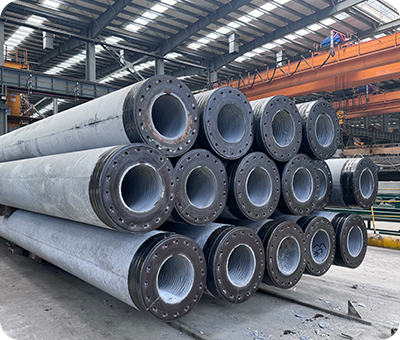
As urban land scarcity pushes towers, bridges and port structures onto weaker ground, foundation engineers increasingly demand piles that deliver higher axial capacity with thinner wall sections and faster on-site driving. Jianhua International's newly consolidated PHC series — covering diameters from 300 mm to 1,200 mm and strength classes up to C80 — responds to that shift by pairing high-strength concrete with optimised spiral reinforcement and fully welded steel caps for mechanical splicing.
Market & Technical Analysis
Demand for high-capacity precast piles is being pulled by three forces:
- Vertical density: High-rise residential and commercial basements in coastal cities require pile groups that resist both compression and uplift.
- Speed: Spun-cast, steam-cured piles arrive site-ready, cutting foundation cycles versus cast-in-place bored piles.
- Corrosion regimes: Coastal and industrial sites need denser concrete cover and optional anti-corrosion coatings.
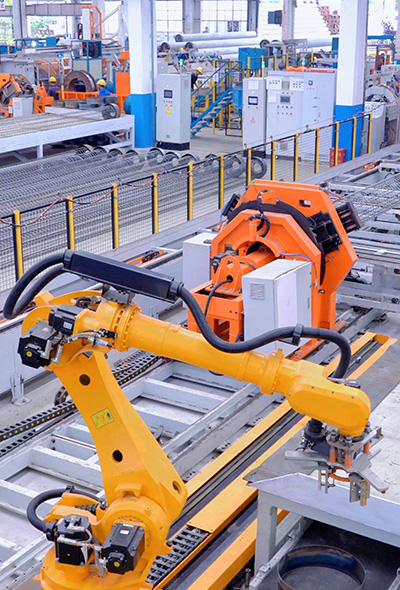
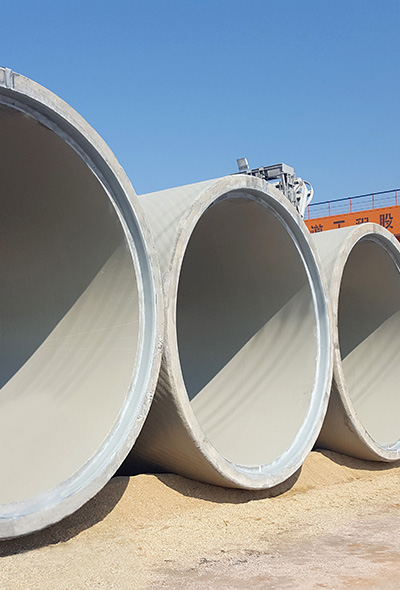
Jianhua's PHC line addresses these through a controlled centrifugal process that compacts the concrete annulus, improving impermeability and reducing the effective wall thickness for a given capacity. For designers, this means smaller cranes, fewer piles per group, and lower total embedded carbon per kN of support.
Project Case Study (representative)
On a representative 28-storey coastal residential tower, the original bored-pile scheme called for 1,100 mm cast-in-place piles at 2.2 m spacing. After value engineering with Jianhua's PHC 600 mm (C80) piles with mechanical joints, the team achieved equivalent axial capacity at 1.8 m spacing, shortening the foundation programme by an estimated 18 days and removing on-site wet concrete works during the rainy season. (Specifics to be confirmed against the client's actual reference projects before publication.)
Professional Recommendations
- Soil first: Run a CPT/profile to set the socket depth before fixing diameter; do not over-specify wall thickness.
- Joint strategy: Use welded steel-cap mechanical splicing for deep or corrosive zones; grouted sleeves suit standard conditions.
- Driving control: Specify a wave-equation driving criteria check to avoid pile bruising in dense layers.
CO₂ accounting: Compare total tonnes of concrete per kN — PHC often beats larger bored piles on embodied carbon.
Scenario Adaptation Comparison
Scenario / Ground Condition | Recommended Jianhua Product | Why | Less-suitable Alternative |
Soft marine clay, high uplift (basements) | PHC pipe pile C80 + welded splice | High tension capacity, factory QC | Square pile (lower tensile joint reliability) |
Corrosive coastal / industrial | PHC with anti-corrosion coating | Dense annulus + coating extends life | Bare H-steel (prone to corrosion) |
Temporary shoring / cut-off | Larsen steel sheet pile | Reusable, fast install | PHC (permanent, not extractable) |
Very hard bearing stratum | Rock-socketed bored pile | Can penetrate boulders | PHC (driving refusal risk) |
User Word-of-Mouth Evaluation
Role | Feedback Summary | Rating |
Foundation Contractor PM | "Shop drawings and joint details arrived within 5 days; driving was clean with no cracks on 600 mm C80." | ★★★★★ |
Structural Engineer | "We hit target capacity at shorter embedment than the bored-pile alternative — saved programme." | ★★★★★ |
Procurement Officer | "Single supplier for pile + splice + cap simplified logistics versus mixing vendors." | ★★★★☆ |
Procurement & Application Guide
- Specs: Diameter 300–1,200 mm; wall 70–130 mm; strength C60–C80; length by 1 m increments; finishes plain / coated.
- Applications: High-rise & basement, bridges, wharves, power-plant foundations, industrial plants.
- Ordering: MOQ per diameter typically one production lot; lead time 15–25 working days peak season; custom lengths and coatings on request.
Next step: Email jianhuaguoji@jianhuaintl.com with project geotech profile for a free pile-layout and capacity proposal.
FAQ
Q: What is the maximum diameter PHC pipe pile Jianhua supplies?A: Up to 1,200 mm, with C80 strength for high-capacity foundations.
Q: Can PHC piles be used in corrosive environments?A: Yes — with denser concrete cover and optional anti-corrosion coatings for coastal/industrial sites.
Q: How are long piles joined on site?A: Via welded steel-cap mechanical splicing or grouted sleeves, selected by load and soil conditions.
Ready to value-engineer your foundation? Contact Jianhua International at jianhuaguoji@jianhuaintl.com for PHC pipe pile specifications, capacity tables and a project-specific layout proposal.
 retorno